01
The handoffs
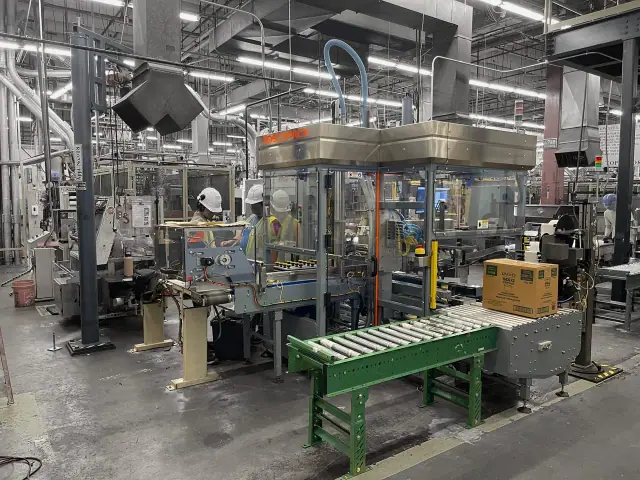
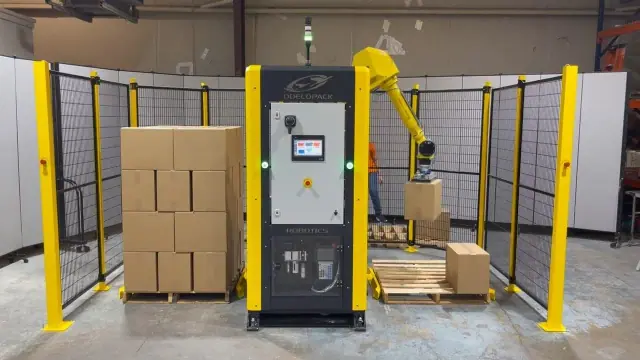
Product changes hands between machines — case packer to conveyor, conveyor to palletizer. Each transfer is a place for product to jam, tip or arrive out of position.
We design each transfer as part of the system: product orientation, spacing and pickup position agreed between the machine that releases it and the machine that receives it.
02
Mismatched rates
Machines rarely run at exactly the same rate, and they never stop at the same moment. Without room to absorb the difference, one short stop becomes a stopped line.
Rates are balanced across the line at scoping, with accumulation sized so a brief stop downstream does not immediately starve or back up the machines around it.
03
Controls islands
Every machine arrives with its own PLC and its own screen. Nobody sees the line as one thing, and diagnosing a stoppage means walking between panels.
The machines are tied into one controls architecture over the protocols your plant already runs, such as EtherNet/IP and Safety over EtherCAT, so the line starts, stops and reports as a unit.
04
Fault recovery
When one machine faults, what do the others do? Undefined behavior at a fault is how a two-minute stop becomes a twenty-minute restart.
Stop, hold and restart behavior is defined for the whole line, so a fault in one cell puts its neighbors into a known state instead of an improvised one.
05
Safety between machines
Each machine may be guarded on its own, while the gaps between them — where people clear jams — are nobody's responsibility.
Safety is assessed across the line, including access points between machines, rather than accepted as the sum of each machine's own guarding.
06
Changeover as a line event
Switching SKUs means every machine on the line changing over. Done one machine at a time, the line spends longer changing than running.
Changeover is planned for the line as a whole, so the machines switch formats in a coordinated sequence rather than each on its own schedule.